
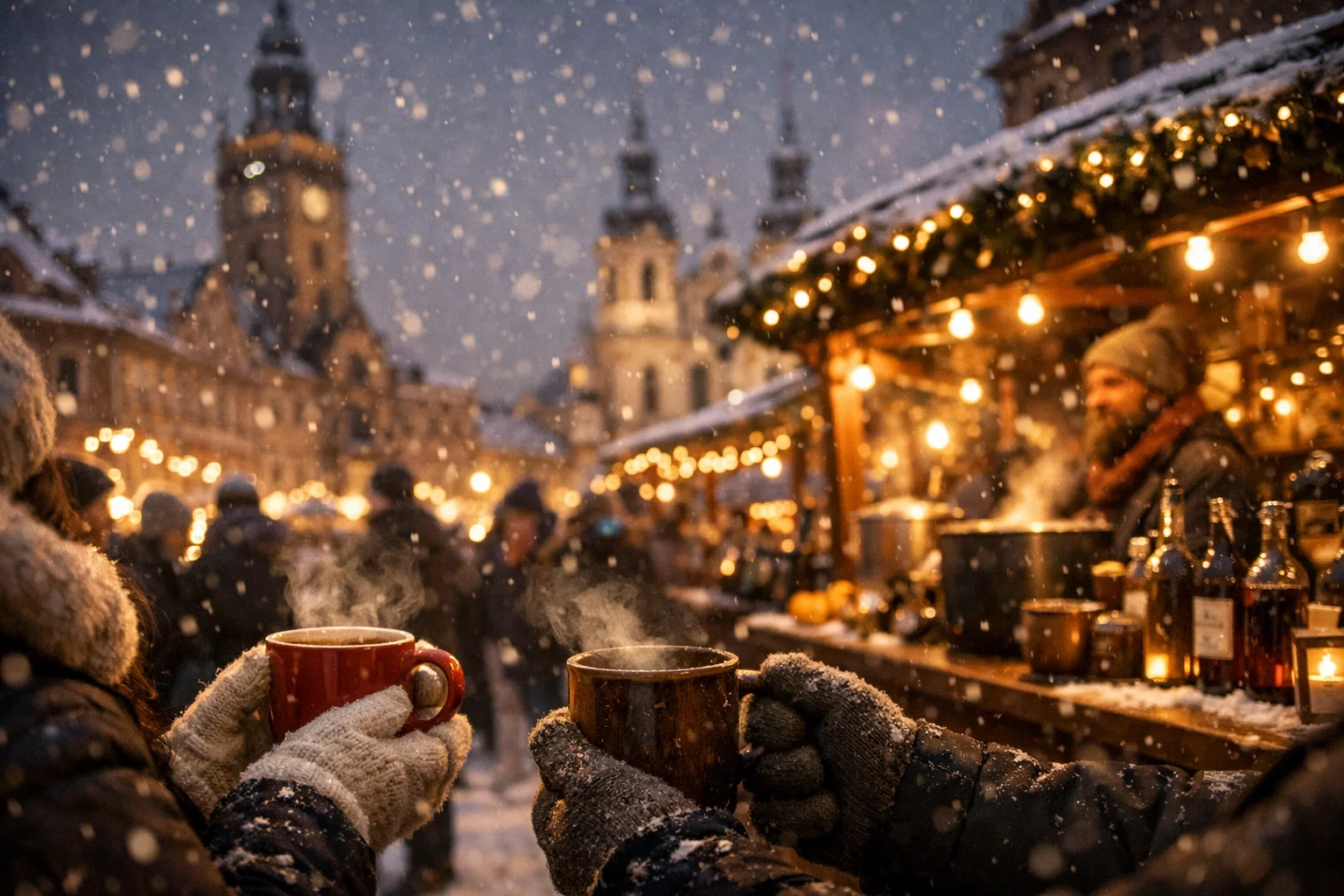
While pilsner and legendary lager halls often take center stage in conversations about Czech beer culture, winters in the Czech Republic reveal a different, cozier side. When brisk winds sweep across Prague’s cobblestones and village rooftops sparkle with frost, locals turn to a world of spiced spirits and traditional drinks found only in bustling Czech squares. These beverages are the perfect companion to the traditional mushroom street food that fills the air with earthy aromas during the colder months. Stepping beyond breweries and brewery tours uncovers an inviting layer of Czech republic travel—one steeped in history and alive with the aromas of festive warm beverages.
A shift from pilsner to steaming mugs
Winter transforms Czech city centers into glowing hubs of social life, where wooden stalls line historic squares and steam drifts from countless cauldrons. The beloved pilsner may rule summer terraces, yet cheerful gatherings in the colder months revolve around piping hot drinks that have been shared for generations. Each cup tells as much about history and traditions as any tour through Prague attractions or hops-laden brewhouse.
The delightful smells of mulled wine, honey liqueur, and Christmas punches mingle with sweet pastries and roasted chestnuts, marking a notable change from the amber pints of warmer seasons. This blend of flavors provides both warmth against the cold and stories passed down during local festivals on long December nights.
The most cherished Czech winter drinks
Czech squares become open-air taverns offering tempting regional specialties. These winter drinks not only keep hands warm; they also reflect ancient rituals and inventive local twists.
Classic favorites in every square
Svařák, or mulled wine, appears at nearly every holiday market counter. Red or white wine is gently simmered with spices, sugar, and citrus peel—perfect for a leisurely stroll among booths. Medovina, a fragrant honey wine sometimes served hot, evokes the country’s medieval roots and love for bee-keeping. Punches made from rum, fruit juice, and warming syrups complete the picture, each region adding its own signature mix.
Grog enjoys particular affection during snowy evenings. Typically crafted with dark rum, lemon, sugar, and hot water, it offers immediate warmth and deep flavor. Locals may debate the best grog recipe, but its presence at Christmas markets is never questioned.
Hidden gems waiting to be discovered
Punč plays a starring role at local festivals during Advent. Its base can vary—sometimes rum-heavy, sometimes centered around fresh orange zest and black tea—but always soothing. Czech-style horká čokoláda (hot chocolate) delivers rich cocoa, sometimes enhanced with chili or cinnamon. For those seeking non-alcoholic treats, steaming apple cider infused with cloves offers pure comfort.
Outside major cities like Prague, small towns might serve krambámbule—a fiery combination of brandy, spices, and caramelized sugar—or eggnog-style vaječný koňak poured generously in cafes decorated for winter.
Experiencing warm drinks as part of Czech beer culture
Beer remains deeply rooted in national identity, but winter brings out a playful side of classic Czech hospitality. While some travelers focus mainly on pilsner or explore breweries and brewery tours, the changing season reveals new rituals worth discovering. Many taprooms expand their menus with seasonal concoctions, and even beer spas across the region weave local spirits into their treatment offerings.
The winter beverage experience becomes especially memorable inside historical market squares beneath twinkling lights. Communal tables encourage mingling while vendors serve family recipes. Interactive events teach visitors how these drinks fit into broader history and traditions, spanning centuries of social celebration.
Tips for enjoying wintertime street life
Part of the joy in sampling winter drinks comes from embracing Czech republic travel in its most authentic form. Knowing where to look can transform an evening out into a memory that lasts well beyond the final sip.
- Seek out local festivals, especially during Advent and Christmas. Many villages and cities host themed weekends packed with food stands, live music, and plenty of warm beverages.
- Ask about homemade or house-specialty drinks at smaller market stalls. Real gems often appear away from main tourist thoroughfares.
- Check schedules for guided night walks or historical storytelling events—these often include tastings of lesser-known spirits or snacks alongside winter drinks.
- Visit beer spas to sample innovative spa cocktails inspired by traditional brews, or simply enjoy a steamy mug overlooking the snowy streets below.
- If visiting Prague, venture beyond Old Town Square. Neighborhood markets in Malá Strana or Vinohrady offer an intimate take on tradition with fewer crowds.
Joining these gatherings offers more than just something delicious to sip; it is an opportunity to connect with a living tradition that ties communities together. Whether standing shoulder-to-shoulder at a rustic stall or gathering by a fire pit, there are countless ways to savor what makes Czech beer culture so uniquely welcoming—even without a pint glass in hand.
Embracing the rich diversity of warm winter drinks invites a deeper understanding of the Czech approach to hospitality. Travelers who arrive expecting only pilsner soon discover a calendar filled with comforting cups and local flavor. As lanterns flicker and laughter echoes off age-old walls, another reason always emerges to linger outdoors—even in the heart of winter.