
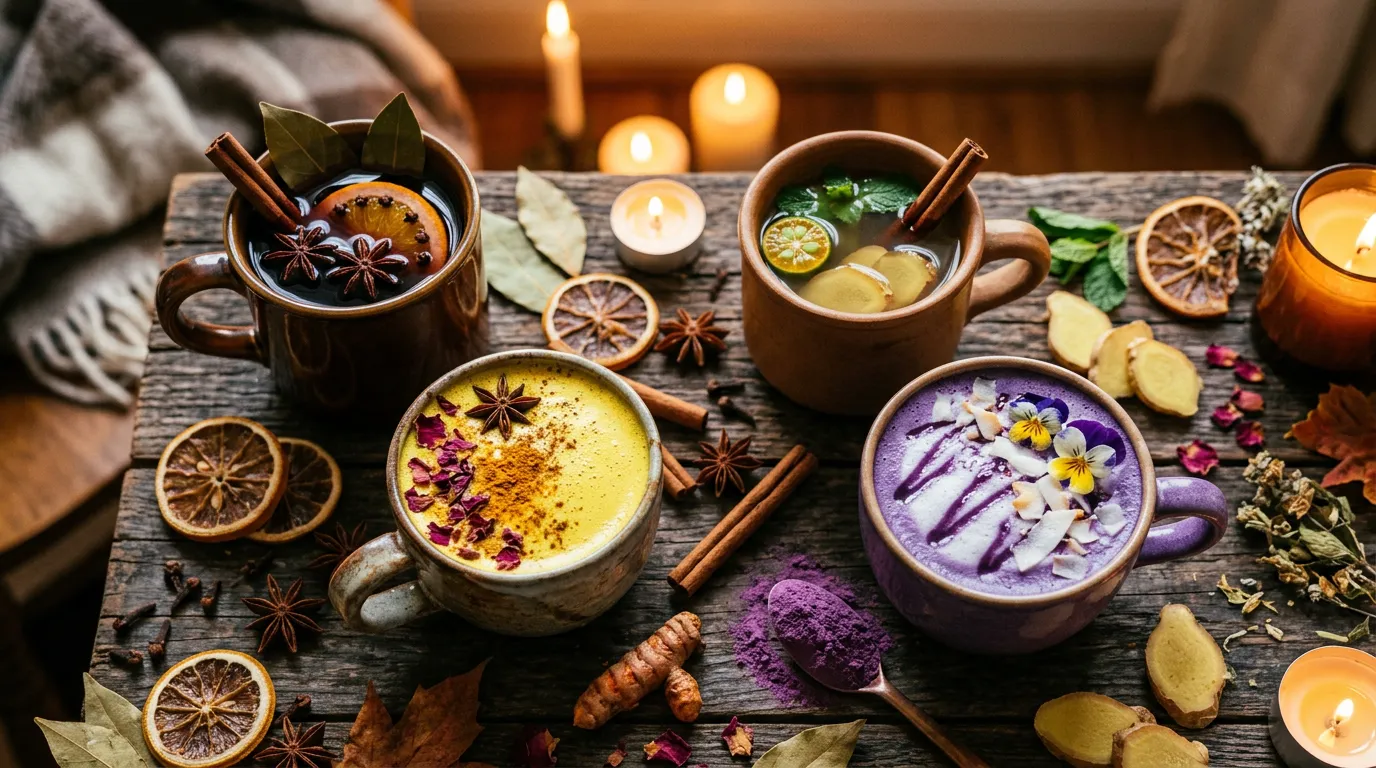
Every culture that has experienced cold seasons has developed its own tradition of warm drinks that do more than raise body temperature. These beverages carry cultural memory, mark seasonal transitions and bind communities around shared rituals of preparation and consumption. The Czech svařák served at Christmas markets, the Filipino salabat ginger tea drunk at family gatherings, the Indian chai that defines the rhythm of the working day across the subcontinent, and the Peruvian api morado that warms market-goers in Andean highlands all share a common function beyond their flavour: they are liquid expressions of cultural identity and seasonal belonging.
Exploring these traditions across cultures reveals both the universality of the human relationship with warming beverages and the specific botanical, culinary and social contexts that make each tradition distinct. It also reveals an unexpected commonality: many of the most beloved seasonal warm drinks around the world are built around root vegetables, spices and botanicals whose health properties have been recognised in their cultures of origin long before modern nutritional science provided the mechanistic explanations.
The ube latte, which we explored in our guide to ube latte in Prague and Czech café culture, represents the most recent addition to this global category of warm, culturally meaningful drinks now finding audiences far beyond their regions of origin.
Czech svařák and the Central European mulled wine tradition
Svařák is the Czech word for mulled wine, and it occupies a position in Czech winter culture that goes well beyond its function as a warm alcoholic drink. From November through January, the smell of svařák simmering in large cauldrons is one of the defining sensory experiences of Czech Christmas markets, from the Old Town Square in Prague to the smaller but equally beloved markets in Brno, Olomouc and Česky Krumlov.
The base is typically a young Czech red wine, often a Moravian Frankovka or Zweigelt, heated with cinnamon sticks, cloves, star anise, citrus peel and sometimes cardamom or vanilla. The spice combination mirrors the mulled wine traditions found across Central and Northern Europe, from German Glühwein to Scandinavian glögg, reflecting the shared botanical heritage of these cold-weather cultures and the spice trade routes that brought cinnamon, cloves and star anise north from the medieval period onward.
Non-alcoholic Czech winter drinks include svařená limonáda, a hot lemonade with honey and ginger, and various herbal preparations with elderflower, linden blossom and chamomile that reflect a deep Czech tradition of forest and meadow herb use that predates the coffee house era by centuries.
Filipino salabat and the ginger drink traditions of Southeast Asia
Salabat is a traditional Filipino ginger tea made by simmering fresh ginger root in water with sugar, typically brown sugar or raw cane sugar, until a deeply flavoured, warmly spiced drink is produced. It is consumed throughout the year in the Philippines but has particular cultural significance during the rainy season and in the cooler months of the upland regions, where it serves the same warming and comforting function as the mulled wines of Europe.
Ginger’s role in Filipino traditional medicine, known as albularyo practice, as a treatment for sore throats, digestive discomfort and general malaise is well recognised, and salabat is drunk both for pleasure and as a home remedy with the kind of confidence that comes from generations of observed efficacy. The anti-inflammatory properties of gingerols and shogaols, the active compounds in ginger, are now well documented in pharmacological research, providing mechanistic support for the traditional uses that Filipino families have practised for centuries without needing scientific validation.
Salabat sits alongside several other traditional Filipino warm drinks including tsokolate, a thick hot chocolate made from native cacao tablets called tablea, and various regional herbal preparations that reflect the extraordinary botanical diversity of the Philippine archipelago.
Indian masala chai and the spiced milk tea tradition
Masala chai, the spiced milk tea of the Indian subcontinent, is arguably the world’s most consumed warm spiced drink by volume, with preparation rituals that vary by region, family and personal preference to produce thousands of distinct versions of a recognisable template. The base is strong black tea, typically CTC Assam or a regional equivalent, simmered with whole spices including green cardamom, cinnamon, cloves, black pepper and fresh ginger, then combined with milk and sweetened with sugar or jaggery.
The chai spice blend, known as masala, has been understood in Ayurvedic medicine as a digestive stimulant, anti-inflammatory combination and warming tonic for over two thousand years. Modern research on the individual components, particularly the gingerols of ginger, the eugenol of cloves and the cinnamaldehydes of cinnamon, confirms anti-inflammatory and digestive-supporting properties at concentrations achievable through regular culinary consumption.
Peruvian api morado : the purple corn warm drink
Api morado is a warm, thick drink made from purple maize, morada corn, simmered with cinnamon, cloves, orange peel and sugar until thickened, traditionally consumed at Andean markets in the morning hours. Its deep purple colour comes from the same anthocyanin pigments found in ube and blueberries, making it a culturally and nutritionally interesting parallel to the ube latte from a completely different food tradition.
The purple maize used in api morado is one of the richest plant sources of anthocyanins in the world, with a concentration that exceeds most berries and purple vegetables. Its consumption in the Andean highlands as a warming morning drink long predates any understanding of anthocyanin chemistry, representing another instance of cultural nutritional wisdom that modern science is now explaining at the molecular level.